Do Light Therapy Lamps Actually Work? A Winter Wellness Guide
Do Light Therapy Lamps Actually Work? A Winter Wellness Guide
Every October the mornings go dark, the afternoons fade by five, and I start getting questions like: do light therapy lamps work, or are they just expensive lights with good marketing?
Fair question. Here's what these lamps are, how people use them, what to look for, and where hype comes in.
My October Problem
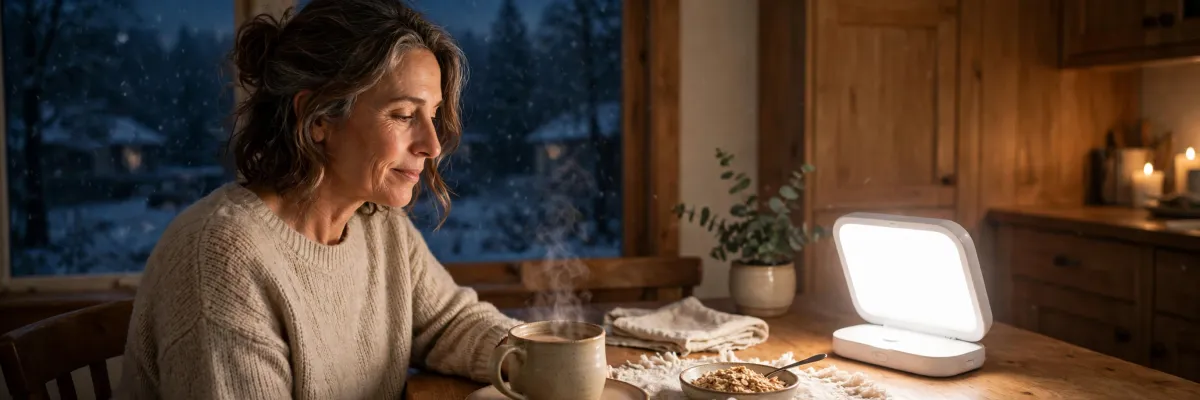
I work from home, and by mid-October I'm eating breakfast and answering emails in the dark. Last year I felt sluggish by 3pm and figured it was diet, sleep, age before considering the obvious: I barely saw daylight for weeks.
That's what sent me down the light therapy lamp rabbit hole… just a woman trying to make her winter mornings feel less like midnight.
What "10,000 Lux" Actually Means (In Plain Language)
Every lamp worth considering is rated at 10,000 lux, so let's decode that. Lux measures brightness, or how much light reaches a surface. The number only means something at a stated distance, which is why reputable lamps list something like "10,000 lux at 16 inches."
Some rough comparisons:
Typical indoor room lighting: a few hundred lux
A bright office: around 500 lux
An overcast winter day outdoors: 1,000–2,000 lux
Full daylight: 10,000 lux and well beyond
Direct sunlight: tens of thousands of lux
So a 10000 lux light therapy lamp delivers outdoor-daylight brightness indoors, at your kitchen table, even in December. That's the whole concept: bright light for dark winter mornings.
These lamps are UV-free by design: bright light without the ultraviolet part of sunlight which is also why they don't do what sunlight does for vitamin D.
How People Typically Use a Light Therapy Lamp
Here's how most people work one into their morning:
Timing: first thing, or within the first hour or two of waking. Most makers suggest 20 to 30 minutes.
Distance: 16 to 24 inches from your face or arm's length. The 10,000-lux rating is tied to a specific distance, so check the specs.
Position: off to the side, not directly in front of you. Don't stare into it, just keep it in your field of view.
Activity: coffee, reading, emails, breakfast… just stay within the recommended distance and position. People who stick with it attach it to something they already do. Lamp on during breakfast is a routine; lamp on a side table you keep meaning to use is a paperweight. I learned that one the expensive way.
Light Therapy Lamp Benefits People Actually Talk About
This is where marketing veers into promises nobody can keep. I'll stick to what users actually report from a bright-light morning ritual.
Dark mornings feel less dreary. The most common report, and the most straightforward: bright light when it's pitch black outside makes the morning feel more like morning.
A more structured start. Many say the lamp anchors their morning. It’s a reason to sit down and start the day intentionally instead of scrolling in the dark.
A brighter-feeling workspace. Work-from-homers often say the lamp makes their desk area feel less cave-like in the darkest months. Light and ambiance matters more than we sometimes think.
What I won't claim: that these lamps treat any medical condition. If you're dealing with seasonal depression, a sleep disorder, or any diagnosed condition, that's a conversation for your healthcare provider.
What to Look for in the Best Light Therapy Lamp
Here's what separates legitimate options from overpriced glow-boxes:
10,000 lux at a stated distance. The baseline spec. If a lamp doesn't state both clearly, move on.
UV-free output. Non-negotiable. Verify it filters ultraviolet light in the specs, don't assume.
UL-listed or ETL-listed adapter. It's an electrical device you'll use daily for months. The adapter's safety certification matters more than any feature. (Same standard I require for everything electrical I vet.)
Adjustable brightness. Not every morning needs full blast. Multiple levels are genuinely useful.
A timer. Twenty or thirty minutes, then it shuts itself off. One less thing to think about.
Size and portability. Larger panels deliver the lux rating at a greater distance; compact ones need to sit closer.
My verdict on size: for most people, a compact lamp on the breakfast table wins since it’s the right distance naturally, portable, the format you'll actually use daily. Go bigger only if you want it across the room or shared. The lamp you use every morning beats the impressive one you don't.
Red flags: vague specs ("super bright!"), no stated lux rating, no safety certifications mentioned, or marketing that promises medical outcomes. A lamp that claims to cure things is a lamp whose maker you should not trust.
Keeping Expectations Honest
A quick reality check:
It's bright light, not sunlight. It won't give you vitamin D, it won't tan you, and it won't replace time outdoors.
It works with a routine, not instead of one. Lamp plus consistent wake time beats lamp alone.
It's sometimes only a seasonal tool for most people. Plenty pack theirs away in April and bring it back in October. That's normal. Many only use it for the low-light months.
More expensive doesn't mean better. The specs above matter far more than brand name or price tag.
Light Therapy: Building It Into a Morning Ritual
The lamp works best as part of your morning routine:
Wake at a consistent time, even on weekends. Advice you may not want to hear, but has a big impact.
Lamp on during breakfast - 20 to 30 minutes, off to the side.
Get actual daylight when you can. A midday walk, even a short one, does what no lamp can.
Wind down intentionally at night. Bright mornings pair best with dimmer evenings.
My Take
I need light to feel better overall - is that just in my head? Maybe, but I honestly do better and my morning gets off to a better start when I have a good amount of light. So far I am LOVING my portable Lux Light Lamp and I'm currently vetting 10000 lux light therapy lamp options for the shop. I’m checking actual lux output, verifying adapter certifications, running daily-use tests through the darkest weeks. A lamp is only as good as its specs, and specs deserve independent verification.
If a lamp passes my standards: real 10,000 lux, UV-free confirmed, UL-listed adapter, working timer…. you'll find it in the shop with my full testing notes.
Frequently Asked Questions
How long should you sit in front of a light therapy lamp?
Most makers suggest 20 to 30 minutes each morning, about 16 to 24 inches from your face and off to the side, never stared into directly. Use it over coffee, reading, or getting ready. Consistency beats duration: a regular morning routine wins over occasional long sessions.
Can light therapy lamps damage your eyes?
Quality lamps are UV-free, which removes the main eye-safety concern with bright light. Still, don't stare into the lamp, it's designed for indirect exposure during your morning routine. Eye condition or light-sensitizing medication? Check with your eye doctor first.
Do light therapy lamps help you wake up in the morning?
Many include a lamp in their morning routine and say it helps mornings feel brighter and more structured especially when it's still dark out. Think supportive ritual, like a strong cup of coffee: a pleasant way to start the day.
What's the difference between a light therapy lamp and a regular bright lamp?
Mostly intensity and design. A room lamp produces a few hundred lux; a light therapy lamp delivers 10,000 lux at a stated distance, is UV-free, and is built for comfortable indirect morning use and usually includes features like timers and adjustable brightness.
When should you start using a light therapy lamp?
Many people start in the fall, when mornings get noticeably darker and continue through the low-light months into early spring. There's no rule, though: if dark mornings are dragging on you, that's your cue. Attach it to a routine you already have, like breakfast, so it is easy to stick to.
Want honest wellness picks in your inbox? Join the Tried & True newsletter.